
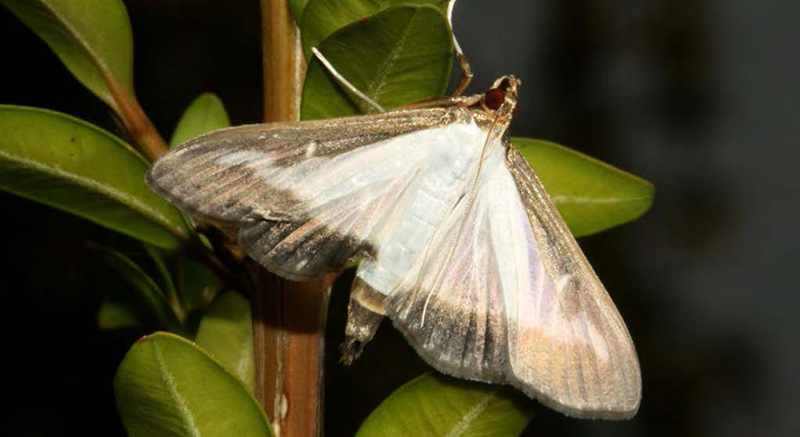
Box Tree Moth, Cydalima perspectalis, (BTM) is an invasive species native to East Asia and was confirmed to be found in West Virginia in 2025. This insect pest feeds on species of Boxwood (Buxus spp.), which is an ornamental shrub used in landscaping by many landowners and businesses.
After its first reported find in Europe in 2007, BTM made its way to Canada by 2018. In 2021, it was found in New York and has continued to spread into other U.S. states, including West Virginia.
Damage
Box Tree Moths feed exclusively on Boxwood species within the U.S.
BTM caterpillars feed on the leaves of the Boxwood plant. If BTM populations grow high enough, feeding can lead to complete defoliation of infested Boxwoods. Once stripped of its leaves, BTM caterpillars can feed on the bark of the Boxwood, leading to branch dieback and potentially causing death of the entire plant.
Early stages of BTM infestation can be difficult to detect. Both eggs and freshly hatched caterpillars are very small, and the most mature caterpillars are only ~1.5 inches in length. It can take some time before signs and symptoms are noticeable, even if someone is checking the plants regularly. It is important to note that this pest will have multiple generations per year, so it is not unusual to see several life stages present at once. More information for checking your Boxwoods for Box Tree Moth can be found on the USDA APHIS website (https://www.aphis.usda.gov/plant-pests-diseases/box-tree-moth).
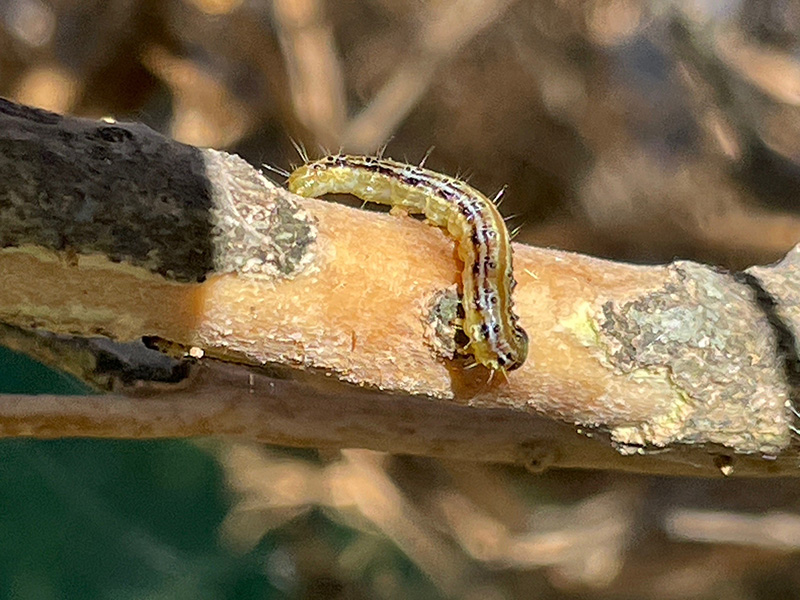
Box Tree Moth Caterpillar Feeding on Bark Photo courtesy of Scott Hoffman, WVDA.
Control Options
One control option is to remove infested boxwoods and replace them with other shrubbery, preferably a native plant.
You can also opt to treat infested Boxwoods with insecticides that are labelled for Box Tree Moth control (or caterpillar control).
Protocols for Removal of Boxwoods
Box Tree Moth Disposal-Sheet
Most At-Risk Entities for Box Tree Moth Infestations in West Virginia
Boxwoods are a very common ornamental shrub occurring in landscaping outside of homes, businesses, churches, and in cemeteries. Landowners and businesses should be on the lookout for this pest, as it has the potential to devastate landscaped areas that contain Boxwood plants.
Finding and tracking infestations of this pest is especially vital to nurseries and nursery dealers in the state of West Virginia to prevent economic losses and spread of this pest to uninfested areas.
Federal Quarantine
As of December 2025, West Virginia was placed under the federal Box Tree Moth Quarantine to ensure the safe interstate movement of Boxwood plants. Please see the Federal Order under for more information on the interstate movement of Boxwood plants and any part thereof.
Report Findings
Please report any new infestations of Box Tree Moth in West Virginia to bugbusters@wvda.us. If possible, include a good quality photo of the specimen in the email report.
Map of Infested Counties
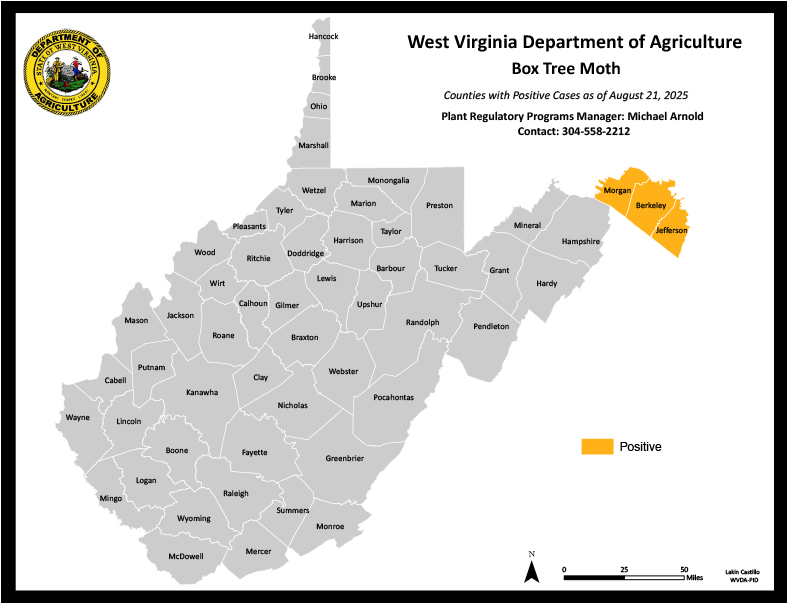
WV Counties with Positive Cases
More Information
USDA Box Tree Moth Fact Sheet PDF Link
WVDA Box Tree Moth Flyer PDF Link
Federal Order for Box Tree Moth Quarantine
Boxwood Alternatives